Visit our website!

For more information about Interactive Publications (IP) Pty Ltd, visit our website or contact us at info@ipoz.biz
Showing posts with label IP Kidz. Show all posts

Wednesday, 9 April 2014

Award-winning illustrator Gay McKinnon heads overseas for IP!

An illustration by Gay McKinnon from The Smallest Carbon Footprint in the Land & other eco-tales has been selected to showcase at the Book Illustrators Gallery (B.I.G) exhibition in Singapore during the Asian Festival of Children’s Content!

The Asian Festival of Children’s Content (AFCC) is a collaborative event of creators and producers with parents, teachers, librarians and anyone interested in quality art and literature for children. The Festival offers various workshops, masterclasses, professional conferences and public events for writers, illustrators, editors, publishers, teachers and children to learn and develop their craft.
AFCC impacts over 1.5 billion children, as well as their families, teachers and professionals involved with their development.

AFCC runs from 30 May- 4 June, 2014 at the National Library Building in Singapore.

Gay McKinnon is a freelance writer and illustrator, as well as a glass artist and lecturer. She currently resides in Tasmania, where she sells her work through galleries and markets.  The Smallest Carbon Footprint in the Land & other eco-tales is Gay’s first children’s book. She is thrilled to have been included in the B.I.G Exhibition in this years AFCC.

Gay will be joined at the Festival by international award-winning authors Sally Gardner, Andrew Weale and Gillian Torckler. A big congratulations to Gay for this brilliant opportunity!


For more information on The Smallest Carbon Footprint in the Land & other eco-tales, visit 


or to learn more about AFCC, visit http://afcc.com.sg/2014

Tuesday, 25 March 2014

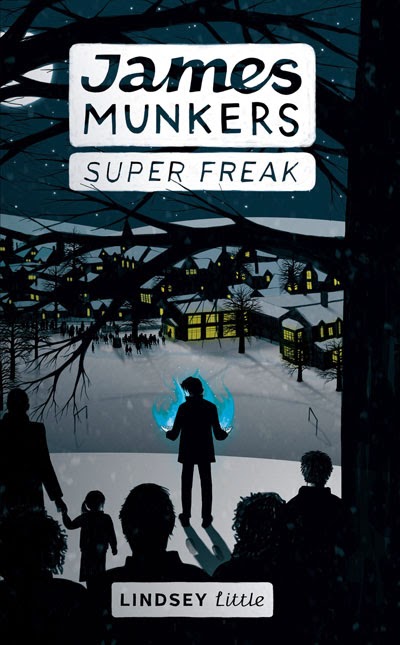
Meet the Author - Children's author Lindsey Little talks about her adventures with James Munkers

Lindsey Little took time out of her busy schedule in rainy Tasmania to chat with us about her crazy adventures in creating James Munkers, the unlikely teenage hero of James Munkers: Super Freak, due for release in April!


http://ipoz.biz/Titles/JMSF.htm

James Munkers’ world is changing. New town. New school.


New hallucinations of bright blue animals wreaking havoc.


And when you add a leather-clad maniac who haunts the back garden, the loopy girl at school with her messages of doom, a cryptic prophecy and a bunch of shadowy strangers intent on murder, it looks as though James won’t even make it to Christmas.


Anna Bartlett interviews Lindsey Little, author of James Munkers: Super Freak.


AB: One of the aspects of James Munkers that has always stood out to the IP Picks judges is James’s voice: cynical, irreverent and very convincing. Now, James is a 15-year-old boy. Given that you’re not, and never have been, how did you make his voice so authentic?

LL: I think it helped that James is a big girl (with no offence intended to James or girls). If I’d been writing from the point of view of a macho kind of guy I might have struggled with it, but James is in turn cowardly, whiney, pathetic, shy and physically inept. I’m sorry to say I can relate to all of these things, and remember with painful accuracy the awkwardness of being fifteen.

I think the real reason he works for me, though, is because his motivations aren’t gender-specific. He wants to be happy, have friends, not be embarrassed by his family every second of the day, and not be killed by maniacs lobbing daggers at his head. These are things we can all relate to.

AB: Were there any tricks you used, when writing James Munkers, to help you tap into his voice?

LL: Sorry, no tricks. I actually find it easier to write in James’s voice than in my own. He seems to have stronger opinions than I do, and a lot more happens to him, so there’s been many a time when not only can I tap into his voice but I can’t get him to shut up.

When I started writing James Munkers I did so without planning anything: no plot, no voice, no idea. James is just what happened. His voice comes very naturally to me.

AB: James Munkers is exactly the sort of book teenage boys will love: packed with fights, escapes, magical explosions and a healthy dose of humour. What was the inspiration for the story?

LL: I wrote what I thought my sister would like to read, which was easy, because that’s what I’d want to read myself. My only preparation for the book, in the absence of a detailed plot or character assessments or any clue at all, was to write down a list of things I wanted to include. At that point, I thought it might be the only book I’d ever write, so I crammed in all the elements I loved in other people’s books: the fantasy of Harry Potter and The Dark is Rising; the adventure and excitement of the Cherub books; the modern, funny narrative of Nick Hornby; the big, crazy family of Gerald Durrell and The Dark is Rising again. That’s what I read, so that’s what I wrote.

AB: The cast of characters you’ve assembled around James – siblings, friends, leather-clad maniacs, teachers – stand out as being both original and quirky. Are any of them drawn from real life – or aren’t you allowed to say?

LL: Just the twins. I don’t usually approve of twins in books – they are so often used as plot devices and are rarely portrayed properly – but seeing as I am a twin, I decided I could break my own rule. Interestingly enough, though, it’s not a case of my sister being one of the twins and me being the other. I’m neither of them. She’s both.

I tell you what, though – I found one of my characters in real life after I’d written him. When I met my supervisor for my masters’ thesis, I kept thinking, “I know you. Where do I know you from?” It wasn’t until a few weeks later that I suddenly went, “Oh my god, you’re Mr Lancer!” Exactly as I’d pictured him. So there you go.

AB: What’s the most useful thing you’ve learnt about writing, throughout the whole writing-and-editing process?

LL: That you can’t fix your book until you’ve written the words first. I used to check and recheck every word I wrote as I wrote it and, consequently, did not get very far. It was only when I eventually thought, “Screw you, words, I’m writing you anyway,” that I started to make progress. Now I write my first drafts in a frenzy, not thinking about plot or characterisation or anything, and often find that my instinct will kick in and the plot will develop naturally on its own. The first draft is about your guts; put your brain on hold until the editing begins. You’ll definitely need it then.

AB: And what did you find the hardest part about writing James Munkers?

LL: Starting, and stopping. I’d wanted to write a book since I was little, but it was such a daunting task that it took a proper kick up my arse to get me started. Once I got started, though, I couldn’t stop, which is my current problem. He’s being published soon, and I can’t keep tinkering about with him, as has been my habit for the last, oh, nine years. He’s a habit I have to break, and it honestly hurts.

My comfort is that he’s too good a character for me to just leave hanging, and I already have more adventures for him up my sleeve. But that first adventure? It belongs to my readers now, not me.

AB: James Munkers: Super Freak will be released in April. To find out more about the book, visit its website. You can also check out Lindsey’s blog and Facebook page. And James Munkers is so talkative that he just had to have his very own Facebook page, too.
 

Stay tuned:  James Munkers: Super Freak will be released in April 2014.

Wednesday, 12 February 2014

Wonderful review of 'The Sky Dreamer' by Anne Morgan and Céline Eimann

We're delighted to see that The Sky Dreamer continues to be popular with education professionals.  With its themes of learning to cope with difficult life circumstances, it's a great story for any library, classroom, or child therapist's office.

This latest review comes from OZTL, the Australian Teacher Librarian Network.
The Sky Dreamer is also available in French, French-English bilingual, and German translated editions.


"This is a most sensitive, alluring book about a child dealing with death.  Written following the death of the author's daughter, it acknowledges that grief is a long journey which may be shared but which is travelled alone.  It can be stormy and seemingly endless but there is eventually acceptance and comfort and a way forward.
 
The beautiful, delicate pictures mirror the mood of the story perfectly - monochrome in Liam's dark days, and the introduction of colour when Cassie appears in the Sky Dreamer hints at a glimmer of hope and happiness.  The chaos and colour of the storms reflect Liam's thinking and feelings, but as they merge into gentler colours and less frenetic images the reader gets a sense of growing peace and calm.
 
Too often our students travel their own version of Luke's journey - this is a book that might help them navigate it more easily, showing them that whatever feelings they have are OK and that they are not alone.  That, in itself, might offer comfort."
- Barbara Braxton, Teacher Librarian, 500 Hats and The Bottom Shelf Educational Blog

The Sky Dreamer
The Sky Dreamer, beautifully illustrated by Céline Eimann

Thursday, 23 January 2014

Come a-Waltzing with us this Australia Day!

As the country gears up for Australia Day and the long weekend, a new wonderful review has arrived for Christina's Matilda by Edel Wignell and Elizabeth Botté.


'With Australia Day almost upon us, what better opportunity to review this fascinating title by Edel Wignell focussing on the story behind the story of our unofficial anthem, ‘Waltzing Matilda’?  As Wignell asks, why is Paterson’s role in the creation of this song so well-known when that of Christina Macpherson is almost unknown, even though it is just as vital?   Wignell then tells us the story of Macpherson beginning with an encounter with bushranger Daniel ‘Mad’ Morgan at the family home of Peechelbar in Victoria, her childhood in a large wealthy Melbourne household, and her eventual meeting with A.B. ‘Banjo’ Paterson at the home of her brother on a station on the Diamantina River about 128km from Winton, Queensland. Evenings were a time for entertainment – Paterson sharing his poetry and Macpherson playing the piano, including a tune called “Craigielee” that she had heard at the Warrnambool Races some time before and which had stuck in her mind.  Paterson was well aware of the plight of many shearers displaced by the Great Shearers’ Strike in 1894 and the stories accompanying the hardships they endured, and it wasn’t long before he penned the words of  ‘Waltzing Matilda’ to fit the tune. Wignell then traces the story of the song through to its place in the Australian identity today, including the work of Richard Magoffin who relentlessly tracked the song’s origins, eventually being able to identify Christina’s contribution in 1983.

The story is accompanied by a variety of illustrations including paintings and drawings, maps, photos, posters and programs, letters and sheet music, each adding to the authenticity of the story and providing insight into the times that inspired the lyrics and the history of the song.  Perhaps the most interesting is a facsimile of an extract from a letter from Christina which explains how the song came to be. Each sepia page is bordered with exquisite line drawings by Elizabeth Botté which enrich and enhance the story. 

While it is written in a style and language accessible to a newly independent reader, its use of primary sources to support the text would be a great way to introduce the importance of these sorts of sources to support research and provide evidence, an integral element of the historical skills strands of the Australian History Curriculum for Year 7.   


This is a resource that needs to be on library shelves and a story that needs to be known by everyone old enough to sing the song!'
- Barbara Braxton, Librarian Teacher, M.Ed. (TL); M.App.Sci. (TL); M.I.S. (Children's Services)

And we couldn't agree more!

Add a lot more Australiana to your Australia Day with your very own copy of Christina's Matilda and come a waltzing with us!


Wednesday, 8 January 2014

What do President Obama and Madonna Have To Do with Project Earth-mend?

What do President Obama and Madonna Have To Do with Project Earth-mend?

Margaret Warner of Buzzwords had this to say in praise of Tiger Takes the Big Apple:
Tiger Takes the Big Apple is the fourth book in the Project Earth-mend Series by David Reiter. Once again the adventurous Crew consisting of native Australian animals (the blue-tongue lizard and the crow) and introduced species (the cat and camel) team up with Tark the shape-shifting extra terrestrial in the form of a frog, to combat The Great Danger threatening planet Earth.

Mick, the robot Commander of the Abell 2218 starship fleet and the robot crews are planning to destroy the Earth or at least the humans on it. Their reason is that humans have plundered Earth’s resources choosing wealth and waste over the health of the planet and in the process have caused widespread pollution of the air and water and are also guilty of ignoring climate change. They do not want the planet Earth to influence other planets so their mission is to destroy the humans.
Tark and his Crew set off in their Teleportation Module for the Big Apple (New York) stopping at various destinations along the way. They encounter different species of creatures who live in varying habitats aiming to enlist them to sign up to Project Earth-mend. Not surprisingly they hear that the future of all of the different species they meet (the timber wolves, the bats, beavers, eagles, racoons and rats plus others) is already compromised as a consequence of the humans’ thoughtless plundering of the Earth’s resources and it seems that Mick has already contacted them hoping to gain their support.
http://ipoz.biz/Titles/TTBA.htm

Just when the future of planet Earth look lost, Tark and his Crew manage to persuade President Obama and Madonna to address the United Nations Security Council in New York to convince them to pledge that all countries will work together to combat global warming and work towards a sustainable future.

Tiger Takes the Big Apple deals with important environmental issues but its quirky characters, fast-paced action, laugh out loud humour and sci-fi technology ensure that it is always first and foremost a great read suitable for ages 8 to 12.
 Tiger Takes the Big Apple is available for pre-order from IP Sales and our usual distributors, with release date of 1 February. Special bundle prices for the Series are available upon request.

Wednesday, 4 December 2013

'Granny Rags' wows critics at Reading Time

Granny Rags by Janet Reid

 
"This junior family thriller that embodies a not-so-fearsome witch, bullyboys, petty crooks and a mystery to be solved, moves at an un-put-down-able pace. This is just the right sort of book to help establish the 'reading bug'.
 
Tim Trickett is a new boy at a small rural school and prey to the bullyboys because of his diffidence socially and physically. He also has an over-protective mother and a physical ailment that he seeks to keep secret.
 
Fortunately for him, before the term begins he meets Lockie, an outgoing, broadly spoken boy from the neighbourhood who acts as a social buffer for Tim. Lockie's family is well-grounded working class; Tim's father is a DON, Director of Nursing at the local hospital. This itself gives grist to the bullies, who relentlessly present Tim the challenging initiation test that involves him facing up to the reclusive Granny Rags, the local 'witch'.

Tim, urged on by Lockie, not only passes that test, but also perceives that there is another face to Granny Rags. Moreover, the two boys become aware of threats to the old lady by local crooks. Old mysteries buried in the past come to light when the Schoolmaster sets the class ferreting out local history.

The plot moves rapidly, yet never loses its grounding in social reality. There is freshness in the references not only to the Harry Potter books, but sly digs at prevailing adult tastes. There is much merit in this seemingly easy to read story of small town country life."

- MS, Reading Time

Sunday, 1 December 2013

Review of The Smallest Carbon Footprint in the Land

For teachers and librarians looking for books to address the sustainability theme in the National Curriculum, The Smallest Carbon Footprint is a collection of stories that certainly fits the bill!


A prince wants to marry the girl with the smallest carbon footprint in the land, and he has her diamond slipper to ensure he finds the right girl; Chicken Licken warns everyone that the sea is rising while Foxy Loxy tries to trick them; Cool Girl learns how to grow organic vegetables from the Sensational Seven…this is a collection of some traditional fairy tales each with a very modern twist designed to spread the sustainability, eco-friendly message.

This is an engaging way to introduce students to the sustainability cross-curriculum priority as embedded in the stories are new vocabulary and explanations for terms that even young students are encountering. They can build on their familiarity with Goldilocks, Jack and the Beanstalk, Aladdin, Little Red Riding Hood and so on and enjoy a 21st century story that will make them think. Teachers will appreciate having a resource that helps them introduce complex concepts in a way that is enjoyable, makes sense and sets a great platform for discussion, as well as comparing the new with the old.

Not only does the collection make a good read-aloud inspiring discussion, but with short stories and intriguing monochrome illustrations it is a great stepping stone between picture book and novel for the newly-independent reader to read alone.

An unusual but worthwhile book to add to your collection.

Barbara Braxton
Teacher Librarian
M.Ed.(TL), M.App.Sci.(TL), M.I.S. (Children's Services)
COOMA NSW 2630
AUSTRALIA
Together, we learn from each other

Review of Bringing Down the Wall


Just in, a terrific review of Bringing Down the Wall, sent in by Barbara Braxton...

Once, Joshua was very close to his grandfather but since his grandmother got really sick and died, he hasn’t seen him because his mother will not let him.  Joshua suspects it has something to do with his grandfather’s new wife, but eventually the tug of family overcomes him and he sets out on his own to visit him secretly. Timidly he approaches the house and knocks, and is greeted by Riva who tries to persuade him to ring his mum while they wait for Grandpa to come home with ice cream.  But Josh wants to see his grandpa first and when he arrives, they sit down and Grandpa tells him a story from his childhood about little boys not being able to make a difference.

But Joshua disagrees – he thinks they can and he thinks he is. 

That’s not the only lesson Joshua learns that day in a sensitive portrayal of a situation of a family’s rift that is all too common.  For not only does Joshua learn that just one person can take the step to healing, he also has his grandfather’s wisdom of knowing why the rift has occurred and there is understanding rather than blame. Sometimes time can heal, but sometimes it can create a gap too wide to cross. His may not be the only heart healed today.

The soft muted tones that Sona Babajanyan has used in the illustrations echo the poignancy of this story that explores topics that are common in our students’ lives but not necessarily written about in books. The ache between grandchild and grandparent and vice versa is tangible, and there’s always a piece of you missing when one is removed through divorce or death.  Too many years can be lost if there is no reconciliation and Joshua may prove inspirational to some. This is fiction mirroring real life. Sometimes all it takes is the courage to pick up the phone. Little people CAN make a difference, indeed.

Barbara Braxton
Teacher Librarian
M.Ed.(TL), M.App.Sci.(TL), M.I.S. (Children's Services)
COOMA NSW 2630
AUSTRALIA
Together, we learn from each other

Friday, 29 November 2013

Review of No Matter Who We're With


No Matter Who We’re With
Robert Vescio
Cheri Scholten

IP Kidz, 2013
Hbk, RRP $A 26.00
Ebk RRP $8.00
9781922120212

This is a sensitive story about two children who are dealing with an issue that so many of our students do – their parents are separated and they spend time living at both houses.  Even though they do different things with each parent, like growing their own vegetables in mum’s splendiferous garden or helping dad make Spaghetti Bolognese, there’s a joy that shines through and the most important message that regardless of who they’re with they know they are loved and that will never change.

Cheri Scholten’s colourful illustrations are the perfect accompaniment as they manage to portray the fun and joy and love the children have, reaffirming and reassuring the young reader that even monumental events like your parents separating can be overcome.

So many children struggle with their parents’ separation, and often blame themselves.  They believe that if they had been better, then their parents would not have split. And then, on top of that guilt, comes the perceived difficulties of spending time with both parents which often leaves them confused and conflicted. The beauty of this book is that it demonstrates that they can have fun with both parents and celebrate the spontaneity and pleasures of childhood, making the most of what is rather than regretting what was or what should be.  It’s a book that needs to be in the library’s collection so that our young readers can read about other children just like them, which in itself, can be a powerful healer. It might even be the catalyst for getting a troubled child to write their own story about the good things they do with each parent and realise that they are loved by both and that won’t change, no matter what.


Barbara Braxton
Teacher Librarian
M.Ed.(TL), M.App.Sci.(TL), M.I.S. (Children's Services)
COOMA NSW 2630
AUSTRALIA
Together, we learn from each other

Wednesday, 20 November 2013

Latest reviews of I Love You Book and Sawdust

This week we feature the latest reviews of our titles I Love You Book by Libby Hathorn and Heath McKenzie and Sawdust by Deborah Kay with Barry Levy.

I Love You Book is a charming picture book about the reasons why children (and adults!) love reading stories in books. It was inspired by a play that Hathorn's adult students in PNG put on to celebrate their excitement over learning to read for the first time. A great Christmas present for young children!

Sawdust is a moving memoir of child abuse that ends not with a broken victim but with a brave woman who has transcended her past and now urges us to protect future generations. It was launched by Ipswich Mayor Paul Pisasale for National Child Protection Week (October). A gift to make you think.

I Love You Book:

"The inspiration for this book could have been the sonnet by Elizabeth Barrett Browning which begins “How do I love thee? Let me count the ways…” because it is an ode to the pleasures and delights of the book – its sights, sounds, smells and the remarkable places it encourages our imagination to visit and the amazing creatures we meet when we get there.

From the “rustle-bustle” of the pages to the “dots and commas, question marks Performing every page” to the “happily-ever-afters, packed-to-the-rafters”, this is an enthusiastic, energetic romp that reaffirms the joy that reading provides and why books are here to stay because they are the perfect format. On each page, illustrator Heath McKenzie has created fantastic artworks (hand-drawn using a digital tablet) which match the energy of the text and help us recall some of the most magic moments in our reading lives. And even if we haven’t yet met the centipede being rude or visited those lands at the top of the tree, it inspires us to find those books so we can.

We ask our students to express why they love books, not just as an exploration of the senses but also as a way of having them recommend books to others. Which books make you “dreamy and sometimes quiet and slow”, and which books make you want to “go, get up and go!”? Similarly, how do those “short-long words” make the story move, and what role do those dots and commas have?

If you’re planning to start 2014 off with a focus on reading and books and the pleasures the children are going to be in for as the year with you progresses, this is a must-have."
- Barbara BraxtonThe Bottom Shelf, OZTLNet (Australian Teacher Librarian Network)

Sawdust:

"This book is an excellent read - such a tough and terrible subject told with such optimism and hope. It helped me to understand how a young child normalises this situation. Deborah Kay is an amazing woman and so brave to tell her story. Her own children should be very proud of her. Well done!"
- Judy White, reader